
Skip to content

Room 02 · 1866–2000

Building Queensland

From cultivated ground to shared knowledge

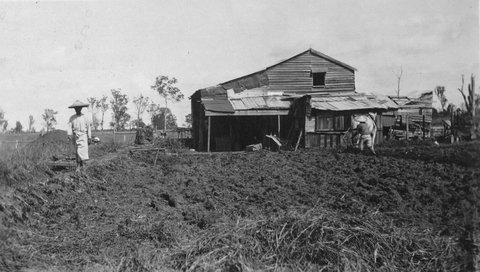
Chinese market garden at Kalinga, Brisbane, ca. 1925. Crops, working ground and buildings share the frame.

State Library of Queensland, negative 64177, ca. 1925. Photographer unidentified. Open the source (opens in a new tab)

Room 02

Building Queensland

A town is built through work that often escapes the grand histories: growing food, keeping a shop open, sharing skills and pursuing a difficult question. Follow Chinese Queenslanders through gardens, trading streets, a northern farming community and a Brisbane laboratory. Their work created connections as well as livelihoods. These stories unfold on Aboriginal Country, within a colonial society where opportunity was unequally shared.

Room 02 · 01

Late 1800s–1900s

From creek to kitchen table

Before fresh produce could reach a Brisbane kitchen, someone had to coax it from the soil. Chinese gardeners leased land beside creeks, tended vegetables and carried their harvest to customers. Water, organised labour and knowledge of growing conditions sustained this everyday trade.

The State Library’s research follows gardens along Enoggera, Kedron Brook, Breakfast and Ithaca creeks. The Kalinga photograph invites us to look past the rows of crops towards the work and shelter that made a garden possible. These were productive places within the city’s life, even when the people who worked them were recorded only imperfectly.

Chinese market garden at Kalinga, Brisbane, ca. 1925. Crops, working ground and buildings share the frame.

State Library of Queensland, negative 64177, ca. 1925. Photographer unidentified. Open the source (opens in a new tab)

Room 02 · 02

1880s–1920s

Beyond the diggings: farming at Atherton

For people leaving the northern goldfields, a new livelihood did not necessarily mean a new country. Chinese settlers reached the Atherton area in the early 1880s, working in timber and then farming. Fruit, vegetables and maize connected their labour to the needs of nearby settlements.

A Chinatown developed beside this farming life. Its shops and temple served a wider district, bringing people together beyond individual holdings. The heritage record also describes the loss of Chinese agricultural leases after the First World War, as land passed to soldier settlement. The story of cultivation is therefore also a story of insecure tenure: years of work did not guarantee the right to remain.

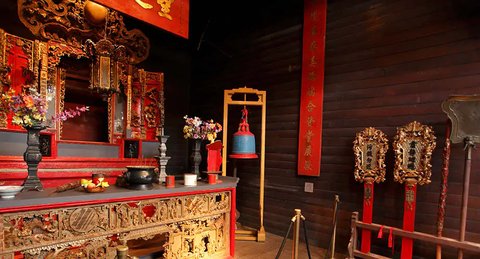
Hou Wang Temple today, a surviving focus of Atherton’s former Chinatown. This contemporary view provides context; it does not show the nineteenth-century farms.

Image source: National Trust of Australia (Queensland), Hou Wang Chinese Temple and Museum. Open the source (opens in a new tab)

Sources for this story

Room 02 · 03

1880s–early 1900s

A shop connected to a wider world

A merchant’s shelves brought distant places into everyday Queensland life. The Brisbane firm On War Tai advertised tea, groceries, rice, Chinese goods and household wares. Its Wickham Street premises formed part of a commercial world extending beyond a single shopfront.

Brisbane City Council’s heritage history follows the business through trade, expansion and attacks on its premises. Success did not put a Chinese merchant beyond racism. Read the building as a place where enterprise and vulnerability met: goods arrived, customers came through the door, and a business had to continue within a society that could turn against it. The same address also leads into the story of resistance in Room 03.

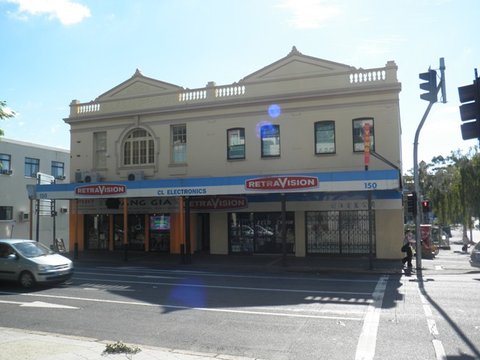
The heritage-listed Wickham Street premises associated with On War Tai. A contemporary building photograph is a trace of place, not an image of the original shop in operation.

Image source: Brisbane City Council, Heritage Places, BAFS and Mackay Jewellers (former). Open the source (opens in a new tab)

Room 02 · 04

1991

A Brisbane laboratory, a shared discovery

Building Queensland also means building knowledge. At the University of Queensland, Jian Zhou worked with Ian Frazer, Xiao-Yi Sun and colleagues on human papillomavirus research. Their work produced virus-like particles: structures resembling the virus’s outer shell that helped underpin HPV vaccine technology.

The team filed an initial patent in 1991. Further development and clinical trials followed before vaccination began in 2006, beyond this room’s main period. This was collaborative work, carried across laboratories and borders rather than achieved in isolation. Zhou’s story connects Chinese migration with Queensland research, while reminding us to distinguish the discovery of a technology from the later testing and delivery of a vaccine.

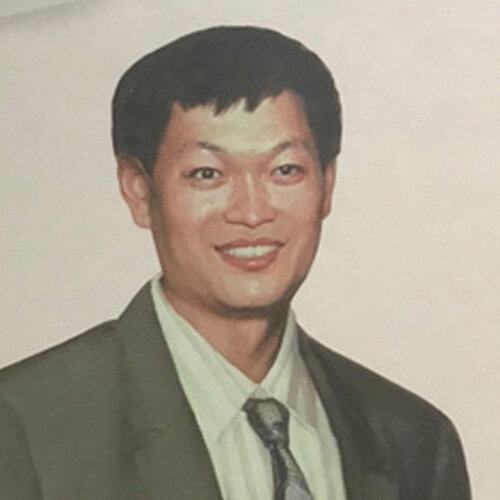
Dr Jian Zhou, from the museum’s existing People collection. His research belongs to a wider history of collaboration at UQ.

Portrait reused from the Chinese Museum of Queensland’s existing Dr Jian Zhou article. Original photographer not identified on the inspected collection card. Open the source (opens in a new tab)

Continue in the museum

Room 02

Timeline

Open a dated entry, then follow it to the story.

  1. Late 1800s–1900sFrom creek to kitchen table

    Before fresh produce could reach a Brisbane kitchen, someone had to coax it from the soil. Chinese gardeners leased land beside creeks, tended vegetables and carried their harvest to customers. Water, organised labour and knowledge of growing conditions sustained this everyday trade.

    Read the story: 01 · From creek to kitchen table
  2. 1880s–1920sBeyond the diggings: farming at Atherton

    For people leaving the northern goldfields, a new livelihood did not necessarily mean a new country. Chinese settlers reached the Atherton area in the early 1880s, working in timber and then farming. Fruit, vegetables and maize connected their labour to the needs of nearby settlements.

    Read the story: 02 · Beyond the diggings: farming at Atherton
  3. 1880s–early 1900sA shop connected to a wider world

    A merchant’s shelves brought distant places into everyday Queensland life. The Brisbane firm On War Tai advertised tea, groceries, rice, Chinese goods and household wares. Its Wickham Street premises formed part of a commercial world extending beyond a single shopfront.

    Read the story: 03 · A shop connected to a wider world
  4. 1991A Brisbane laboratory, a shared discovery

    Building Queensland also means building knowledge. At the University of Queensland, Jian Zhou worked with Ian Frazer, Xiao-Yi Sun and colleagues on human papillomavirus research. Their work produced virus-like particles: structures resembling the virus’s outer shell that helped underpin HPV vaccine technology.

    Read the story: 04 · A Brisbane laboratory, a shared discovery

Room 02

Map

Choose a place to find its stories. The list offers the same links as the map.

Schematic map of Queensland. Places are approximate; markers are for orientation, not travel directions.

Map

Choose a place to find its stories. The list offers the same links as the map.

Stories

  1. 1.Brisbane

  2. 1.Fortitude Valley

  3. 2.Atherton

Room 02

Objects and records

Look closely at the records and images used in this room. Original items are held by the credited institutions or remain at their sites; they are not owned by this museum.

Room 02

Sources and image credits

Images are credited beside each figure. Follow the source links to explore their original context.

  1. Vegetables Directly from Creek to Table: Chinese Market Gardens in Brisbane (opens in a new tab) — State Library of Queensland
  2. Hou Wang Miau, Queensland Heritage Register 600010 (opens in a new tab) — Queensland Government
  3. Hou Wang Chinese Temple and Museum (opens in a new tab) — National Trust of Australia (Queensland)
  4. BAFS and Mackay Jewellers (former): On War Tai history (opens in a new tab) — Brisbane City Council
  5. GARDASIL – the HPV vaccine: Case Study (opens in a new tab) — NHMRC
  6. Life change for life changer (opens in a new tab) — The University of Queensland